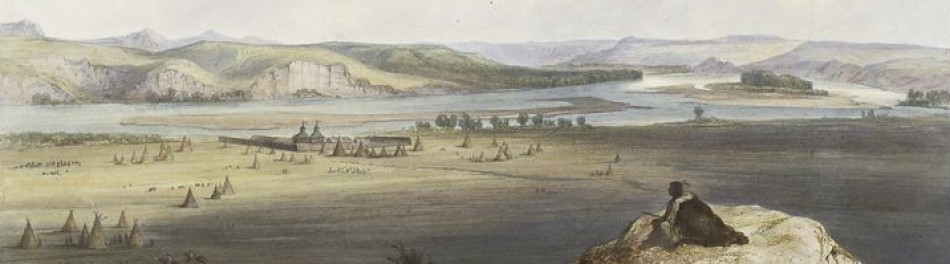
Hände hoch! (Hands up!)
The 2012 Karl May Festival entitled “Vom Greenhorn zum Evergreen” will be held in Radebeul, Germany from May 18-20. At the website for the fest, you can download a 40-page program — in German only, alas! The program contains a map showing the route of the “Santa- Fé-Express” that will carry visitors from Radebeul-Ost to Lössnitzgrund and the festival locales in-between. Karl May enthusiasts dressed up as Old Shatterhand or his faithful sidekick, Winnetou, can participate in Wild West reenactments, buy cowboy boots, or attend a pow-wow hosted by members of the Navajo Nation or by Peigan-Blackfoot Indians from Alberta, Canada.
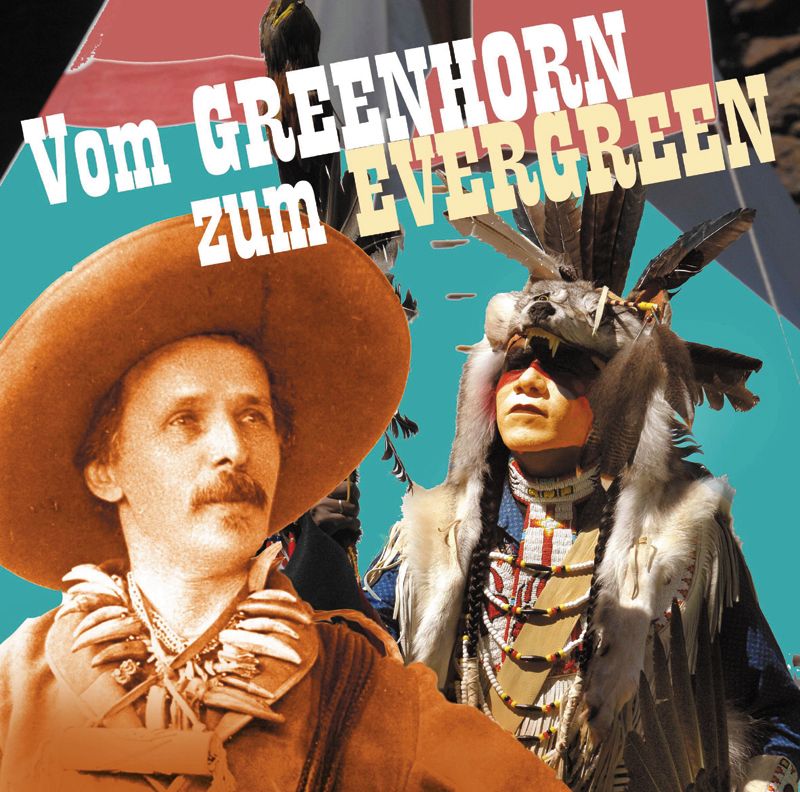
Even with no knowledge of German, it’s clear from the program that “2012 ist ein besonderes Jahr in the der Chronik Karl Mays.” Born on February 25, 1842, this year marks the 170th anniversary of Karl May’s birth. “Who the hell is Karl May?” you may well be asking if you’ve bothered to read this far. Karl May is simply one of the all-time bestselling authors of whom nobody, outside of the German-speaking world, has ever heard.
A grifter and petty thief who served multiple jail terms, May was born in Ernstthal, Germany, the fifth of 14 children, few of whom survived infancy. He grew up in extreme poverty and was blind for the first four years of his life, possibly as a result of the combined effects of nutritional deficiencies and childhood illness. A gifted student despite these early disadvantages, May was headed for a promising teaching career until his propensity for taking things that did not belong to him brought an end to those plans.
In the introduction to his translation of Karl May’s novel Winnetou, David Koblick draws parallels between May’s personal history and the Horatio Alger tales. Though German, May also evokes another all-American literary type — the “Confidence Man.” His career as a swindler depended on his skill as a fabulist who constructed fake identities and impersonated police and other public officials. His immense success as a writer was built on his ability to invent a vision of the American West that he himself never visited.
May put his time spent in prison to good use: reading voraciously in what was already a considerable “western” literary canon written by Germans, writing, and collecting rejection slips from publishers. Richard Cracroft suggests that the enduring popularity of Karl May’s fiction, as well as the failure of his work to catch on outside of Europe, is based on May giving us “the perfect Germanic hero” in Wild West drag. Written after the Franco-Prussian War in a victorious Germany that was rapidly industrializing and urbanizing, Karl May’s tales of the Old West contributed to Germany’s nationalistic pride. Old Shatterhand (known also as Karl der Deutsche) is Superman with a cape made of rawhide.
Source:
Karl May, Winnetou, translated and abridged by David Koblick, with a foreword by Richard H. Cracroft (Pullman: Washington State University Press, 1999).
 Cowboys und Indianer