Alexander Humboldt & His “Offspring”
Alexander Humboldt (1773-1858), the great German scientist, explorer and humanist is the local spirit of this blog.

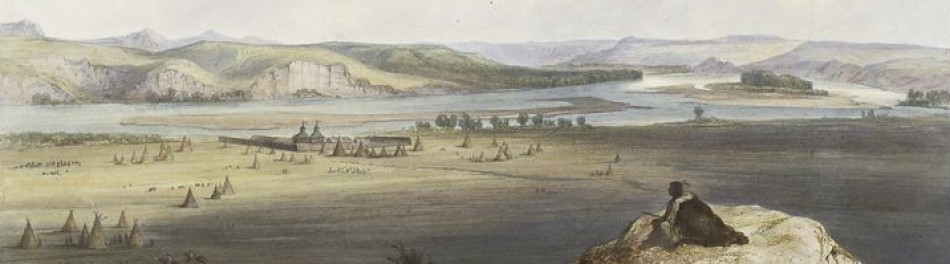
In her book, The Passage to Cosmos: Alexander von Humboldt and the Shaping of America, Laura Dassow Walls introduces the generation of scientists, explorers, artists and gentlemen travelers who would build on and extend Humboldt’s work (often with references and help provided by Humboldt himself). Taken together, these explorers produced a body of literature that greatly influenced the way Europe and America envisioned the American West. Unsurprisingly, given Humboldt’s influence and reach, many of these individuals were Germans: Paul Wilhelm, Duke of Württemberg; Balduin Möllhausen; Maximilian, Prince of Wied; the artists Karl Bodmer and Albert Bierstadt; Frederick Wislizenus; Georg Engelmann and others. Referencing the travel and writings of Möllhausen in a chapter entitled “Manifest Destinies,” Walls makes a passing comment about Karl May, who she calls “the best-selling German author of all time,” though he is hardly known outside Europe. Karl May — this German JK Rowling or, perhaps more appropriately, the German Mark Twain of his time — enjoys a popularity among German-speakers that continues up to the present day. May profited from and contributed to what Walls describes as “the powerful identification of Germans with the victimized American Indian” — an identification that has left its tracks across the writings of many of the inheritors of Alexander Humboldt’s legacy. This blog sets out to follow these tracks to wherever they might lead us.
 Cowboys und Indianer