The Wisconsin Idea
It’s been awhile. I’ve been spending a lot of time trying not to finish writing my master’s thesis and figured I could partially assuage my conscious by not blogging! Mitt Romney’s selection of Paul Ryan pushed me into coming back — or rather recent news coverage of his V.P. pick aroused my curiousity and, well, here I am.
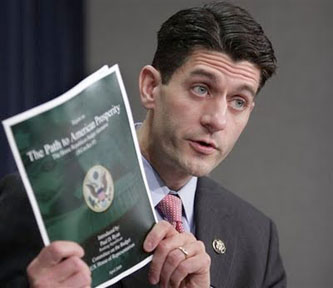
One of the recent tropes being propagated by the “liberal media” is Paul Ryan’s April 10, 2010 interview on Glenn Beck’s radio show. Let us bow our heads in humble gratitude to the anonymous techie(s) who memorialized and preserved it. On the Glenn Beck video, we get to hear Ryan (he’s not physically present at the radio station) pontificate on why progressivism is evil. During the course of this speech, Ryan situates himself as someone who grew up in Janesville, Wisconsin (a Democratic stronghold in the last presidential election) and who therefore has special knowledge about the progressive goings-on in Madison, Wisconsin, as he says, just “35 miles” away.
I grew up hearing about this stuff. This stuff came from these German intellectuals to Madison-University of Wisconsin and sort of out there from the beginning of the last century. So this is something we are familiar with where I come from. It never sat right with me. . . . [Progressivism] is really a cancer because it basically takes the notion that our rights come from God and nature and turns it on its head and says, no, no, no, no, no, they come from government, and we here in government are here to give you your rights and therefore ration, redistribute and regulate your rights. It’s a complete affront to the whole idea of this country . . . .
So, what “stuff” and which “German intellectuals” and why Madison, Wisconsin? The idea that German intellectuals are the source of progressivism in Wisconsin seems to have its roots in a 1912 publication by Charles McCarthy entitled, The Wisconsin Idea. According to Jack Stark writing partly to rebut McCarthy’s thesis in 1995, McCarthy credits the influence of primarily one professor, Richard Ely, who studied in Germany, as well as the presence of many people of German descent in Wisconsin (“fundamentally a German state”) with shaping the way “The Wisconsin Idea” came to fruition. Stark characterizes McCarthy as a “devoted Progressive” who wrote his book as an appeal to the many German-American voters in the state, where the competing Socialist Party was making inroads into the Progressives’ base!
Like Stark, John Nichols of The Nation, locates “The Wisconsin Idea” within the context of a broader progressive movement. Nichols’ article points to Robert La Follette who led the formation of a progressive wing from within the Republican party, which he believed had moved away from its antislavery platform and been taken over by the railroad and other corporate interests. This reformist wing (known as “Insurgents”) challenged the “Stalwarts” for leadership of the Republican party and La Follette was nominated for governor of Wisconsin. He was elected governor in 1900. In 1924, as head of the Progressive Party, La Follette ran for President of the United States, receiving 17% of the popular vote.
As Nichols details it, La Follette spent a major portion of his life fighting what he and other Progressives called “the money power,” that is, the impact of corporate capital on politics and social policy. Progressives were discussing a national healthcare system as early as 1900. They also believed that government should use its power to prevent monopolization of industries and they favored nationalizing railroads and utilities. La Follette and his party supported cuts to military spending and reform of the tax system to punish profiteering and “the indefinite accumulation by inheritance of great fortunes in a few hands.”
But what about Paul Ryan and his “German intellectuals”? she asked — Germans, as opposed to the “Austrian economists” that along with Ayn Rand apparently have Ryan’s approval. A blogpost at dailykos.com suggests a possible answer worth exploring:
a lot of anti-liberal slurs have their roots in anti-semitism to some degree or another: rootless cosmopolitans, morally and sexually depraved, godless secular humanists, effete urbanites, not heartland farmers, not christians, nerds, lawyers, san francisco, new york city, upper west side, hollywood, commies in academia, etc. etc.
Dogwhistle anti-semitism? One last thing, as far as we know, despite his antipathy to government intervention, Ryan never returned the Social Security survivor benefit checks he received after the death of his father. Oh, and — his family’s business was built on government-subsidized construction projects (i.e. government contracts). We should also not forget Ryan’s muse, Ayn Rand. Rand, in her decrepit old age, was not above signing up for both Social Security and Medicare; however, in keeping with her philosophy, she did sign up reluctantly and in her own self-interest.

 Cowboys und Indianer